19/03/2026 - Fedsas
South Africa’s total education spending stands at nearly R350 billion yet the country continues to spend more on politicians and prisoners per day than it spends on learners per month. Following the recent tabling of the budget in Parliament, Riaan van der Bergh, Deputy CEO of school governing body organisation FEDSAS and Head of the organisation’s Centre for Finance and Risk Management, provides some perspective on government’s spending priorities.
The well-known Big Mac Index is a widely-used tool that allows for a comparison of the purchasing power of different currencies based on the price of a McDonald’s Big Mac burger in different countries. To provide some perspective on the South African government’s spending priorities, I used a “learner unit” based on the same principle as the Big Mac Index.
On average, school nutrition programmes spend R3 per learner per day - but only on school days. If weekends and holidays are included, the amount is R1,90 per learner per day. The National Norms and Standards for School Funding, allocated for school materials, electricity, water, and stationery, among others, equals about R5 per learner per day. Based on this, the total public investment per learner is between R7 and R10 per day. This forms the baseline and is considered one learner unit.
In comparison, the government spends about R130 000 per prisoner per year, or R363 per prisoner per day. This equals 36 learner units per day, meaning one prisoner receives the equivalent of 36 learners’ daily allocation.
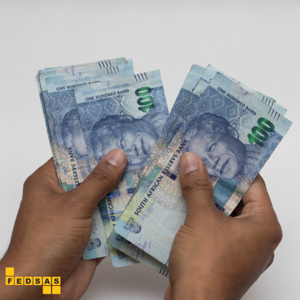
An ordinary Member of Parliament’s salary is around R1,27 million per year, while a senior MP’s remuneration is between R2,6 million and R3,1 million per year. In addition, MPs receive accommodation, flights and travel expenses, security and other allowances. If we take a basic MP salary to be around R3490 per day, it equals 349 learner units per day. One MP receives the daily funding of 349 learners.
The contrast in funding remains clear even if one accounts for the broad generalisations on which the learner unit is based.
In his State of the Nation address earlier this year, President Cyril Ramaphosa emphasised that investing in children is crucial for South Africa’s future. Yet money is spent on correctional services, parliamentary villages and oversized political structures while our country’s future spend their days in overcrowded classrooms without teachers or textbooks.
To this end, only about 7% of the education budget reaches the actual school gates, with parents subsidising schools to the tune of some R60 billion a year. At 93% nearly the entire education budget is spent on salaries and administrative overheads, while the remaining 7% covers everything that makes learning possible. This amount is stretched so thin that a textbook in Limpopo competes with a leaking toilet in the Northern Cape, which competes with a broken fence is the Eastern Cape.
What is the economic dividend of investing in education compared to prisons and politicians? Education is a high-return investment, with every R1 invested in basic education returning R5 to R12 in the GDP over time. On the other hand, incarceration is a net economic cost: Every R1 spent on prisoners returns 40c at best—and often reduces GDP through lost productivity. Politician salaries are a consumption cost, not an investment. They produce no direct, measurable GDP dividend unless linked to exceptional governance outcomes (which SA indicators do not show).
Our spending is the inverse of our needs. South Africa will not collapse because it funds prisoners nor will it collapse because MPs are paid too much. This is also not call for a reduction in the spending on correctional services (although most MPs would comfortably survive a salary cut).
This is a call for more funding for the one group that can prevent collapse: learners. If the South African government continues to fund our present it could destroy our future.